
There’s a certain irony in my remote work journey. Four years ago, we decided to downsize and move closer to our kids. Smaller town, smaller house. It also happens to be about 10 miles from where my great-grandfather Longley grew up. A couple of my cousins and I visited the town yesterday for the first time. I’ve actually driven through it a few times, but never really stopped because there isn’t much there. Currently, the town of Hawley has about 335 residents, making it one of the smallest towns in the state. Its peak population was over 1000 in the 1820s. It did get down to around 200 residents at one point, but it does seem to be on the rebound.
Strangely, it has some of the most spectacular views I have seen anywhere in the state, and I didn’t even see all of the town. It makes you wonder why people leave. Apparently, individuals with some more conservative religious beliefs got entangled in local politics (sound familiar). When the alcohol was flowing, the area was growing. Then, in 1831, my great-great-grandfather and other tavern owners were essentially forced to give up their liquor licenses. The town sort of came apart after that. They moved the town center in 1846 to reorganize, but the town lost more than a few residents during the Civil War. A few years later, my great-grandfather packed up and moved to West Hartford, Connecticut, where there was work.
How it Began
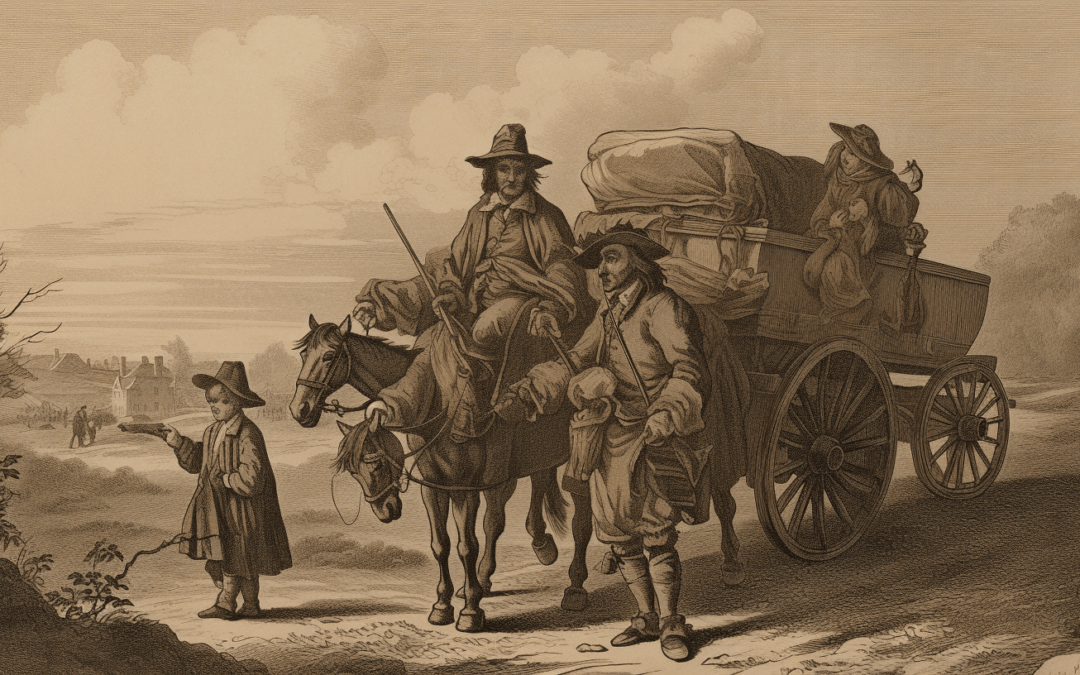
My family seems to have a history of going remote. The Longley’s were on one of the boats shortly after the Mayflower. They moved out of the big city of Boston to Groton Mass. This was sort of the suburbs in the mid 1600s, except for the King Philip’s War that was going on with the Native Americans. This didn’t go particularly well for my family, and as a result, almost everyone with the name Longley in North America descends from one person. Luckily, he liked making babies, unlike his sister, the first nun in North America, and the family grew again. Eventually, his children started going even more remote. Some went to Maine, and my line ended up about 50 miles west in Hawley, Mass, which is where my story started.
This Century
Fast forward a couple of hundred years, and my grandparents were living in a brand new house in West Hartford, Connecticut, with indoor plumbing, running water, and electricity. Considering it was the middle of the depression, they were doing pretty well. They had a 6-year-old, a 3-year-old, and a newborn when my grandfather Longley decided to sell the place and buy a 100-year-old farmhouse 30 miles north. My grandmother never forgave him for that, even if she did learn to love the new farm. It would be a while before she got her indoor plumbing back.
Over the next 60 years, the town grew up around them. My dad kept the farm going for another decade or so after my grandparents were both gone. There were 4 parcels originally. One is now a nature preserve, two were developed for luxury homes, and one is still in the family. I stayed in the area for a few more years, but eventually I answered the call north again.
Starting Over
Going remote isn’t just about work practices. It has a Yin and Yang quality to it. There are both challenges and opportunities. And neither can exist without the other. This seems to be true with both people, organizations, and places. As they reach a steady state, the challenges and opportunities start to wane. But as things change, new challenges and opportunities can emerge. It’s rarely something people see coming so there generally isn’t a plan for it. People figure it out as they go, and new systems and processes evolve.
In many ways I’m seeing some of the same opportunities in the same place that my ancestors saw over 300 years ago. The circumstances are different, but once again the area does seem poised for growth. This is partially due to people who are able to work remote. It also lends itself to the statement that “everything old is new again”. It’s not always true, but it’s fun when it is. One of the surviving tavern buildings in the area was built in 1812. It’s a couple of miles from my house. I’m sure at least one of my Longley ancestors knew the original owner. They may have traded beer or rum recipes. The new owners just reopened to thirsty patrons earlier this week. I think my ancestors would see it as a good sign.