Over the last 80 years, commuter culture has moved us away from our community. Churches, fraternal and community organizations fell by the wayside. Third spaces like barbershops, corner drug stores, diners, bowling alleys, arcades, and pubs slowly disappeared. The office became the community. Swiping into a building five days a week constituted genuine civic or social belonging, rather than proximity dressed up as connection. We barely even noticed until the original structures were gone.
This is the Matrix that remote work revealed. And much like the movie, the agents want us to rejoin the office “community”. Cities and companies have largely treated the shift as a bug to be reversed (return-to-office mandates, downtown “revitalization” campaigns) rather than a structural change to be redesigned around. The irony is that there was a problem to be fixed, but reestablishing this false community structure wasn’t it. This was an opportunity to rediscover and recreate what community is supposed to be.
Self-Organizing Systems
In the early days of commuter culture, Ward Cleaver would come home from the office to his lovely wife and a home-cooked meal straight out of Ladies’ Home Journal. Maybe they would have dinner at “the club” on Friday or Saturday night. As infrastructure built up around the office, Ward stopped bringing his lunch and started ordering out. Bars within walking distance of the office provided an outlet to let the office community really get to know each other thanks to the magic of alcohol. Meanwhile back at home the community structures were falling away, which fueled adoption of the new community structures around the office.
Then came Covid and remote work. It broke the new model. San Francisco alone saw hundreds of millions in lost tax revenue as office-driven downtown activity collapsed, taking small businesses and public services down with it. The “doughnut effect” is when central business districts are hollowing out while suburban areas absorb the displaced activity, leaving downtown cores with reduced foot traffic and eroded tax bases. Unfortunately this doesn’t happen by accident, it takes people recognizing the changing patterns.
Our Sense of Community
Organizational research on “sense of community” shows that as physical co-presence drops, the informal support structures that made people feel like part of something don’t automatically migrate online; they often just quietly disappear. We have to put new information into the process that there are other ways of doing things.
This is where new ideas start to emerge about what community is and where it exists. You can get clues about the emerging structure by looking at New England communities around 1820. Here’s some of the dimensions:
- Local taverns
- Bread making
- Playing games
- Local music
- Plays and other performances
- Community festivals
- Hand made arts and crafts
- Entrepreneurship
- Local food production
As these ideas percolate, most people don’t know where to start. It usually takes some experimentation or a YouTube video to start the rebuilding process. And having someone crazy enough to just jump into the deep end of the pool.
Rebuilding Structures
The office was never really community infrastructure. It was a proxy that let people avoid building local ties, because proximity did the work that intention was supposed to do. Remote work didn’t create the collapse of local civic and social infrastructure. It removed the camouflage that had been hiding it for decades. So how do you rebuild real community structures?
- Map out what the community should provide socially (casual contact, informal mentorship, deep connections, serendipitous conversations, etc.)
- Rebuild or redefine third spaces. This can be coworking spaces, libraries, cafe’s, taverns, performance spaces, galleries. etc.)
- Create new rituals such as meetups, volunteer committees, neighbor-to-neighbor programs, open mic events, Karaoke, etc.
- Measure what matters. Are people happier? Does it encourage tourism or economic development? Do clubs and groups form?
Where to Start
As Glinda said, “It’s usually best to start at the beginning”. This is where you run into a physics problem. A body at rest tends to stay at rest, and a body in motion tends to stay in motion unless it is acted upon by an outside force. Getting things moving when it hasn’t previously is difficult. Steering a ship that is moving to go in a different direction is also hard. You’re going to run into both of these challenges in some way, shape or form. Just do it anyway.
My Community Journey
In my own personal case, I’m trying to tackle everything on the list above almost at the same time. It’s not a complete list, but it is a good representation. Here’s what I am trying to do in my community in all of these areas.
- Local taverns – I’d like to think I had a small hand in reopening our local tavern. I’ve arranged tax credits and help bring people back.
- Bread making – OK I’m not actually doing this one because my daughter already does it better than I can. But I still think I get a point or two for creating her in the first place.
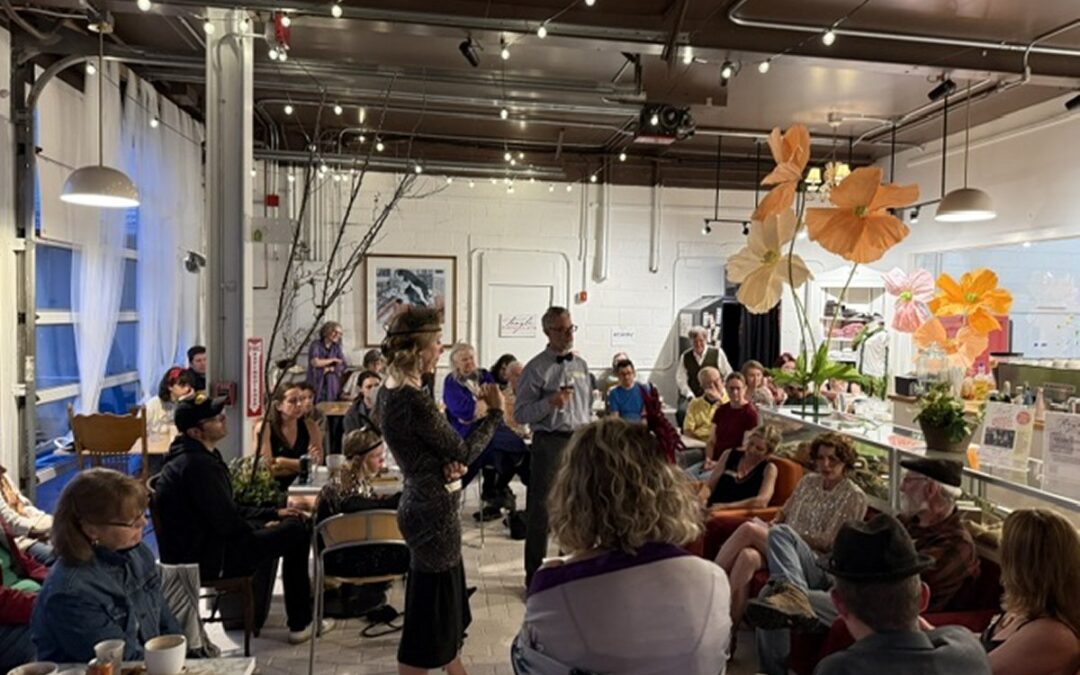
- Playing games – I have created a series of community-level games, mostly murder mysteries, that are designed to be played on a large scale. Our first murder mystery had around 50 people participate.
- Local music – working with local musicians to find places to play, make music economically viable, and connecting musicians and venues
- Plays and other performances – I have created a small library of plays and radio shows that are designed to be done as a table read. This can be just as entertaining as a full-production play without the cost. And they can be done almost anywhere.
- Community festivals – come join us in September for our Second Annual Williamsburg Porchfest
- Hand-made arts and crafts – my office looks more like a gallery. I ran out of wall space long ago, and my wife keeps asking me what I’m going to do with all the artwork.
- Entrepreneurship – lots of projects in the works.
- Local food production – I worked with a local group to create a community garden project.
Looking to the Future
Remote work revealed that most of us had outsourced community to our employers. Once we recognize that, it becomes a matter of rebuilding the third places, civic habits, and local rituals that should have existed all along. Once you see it, you can’t unsee it. The challenge is getting started. If you don’t know where to start, I’d be happy to give you some ideas.