Remote work is great in that it gives you time to do other things. But what other things are you going to do? I write more, paint more, renovate my children’s houses more, etc. All of these are more or less individual things. I don’t get lonely, but I know that is a challenge for a lot of remote workers. What is missing for a lot of people is connections. Some leaders think the way to fix those is by getting everyone back to the office, but it’s an artificial construct. We’ve already shown that we can generally work without an office, so do we need an office just for connections? Probably not. In most cases they weren’t real connections in the first place. We do need to rediscover the connections that are real.
Down with Commuter Culture
It probably helps to know how we got here. Commuter culture was years in the making. Following WW2, America gave birth to the suburb, which was closely aligned with the central business district of the city the suburbs surrounded. As time went on, the suburbs grew and people started commuting further and further to get to work.
Soon, those things that used to happen in communities were replaced with new institutions like daycare, travel soccer, drinks after work, etc. Many of the connections that happened in communities were now happening in and around the office. This created new structures and caused older structures like churches and civic organizations to fade.
Going remote doesn’t just bring these older institutions back to life. In many cases, they don’t exist anymore. They may need to be recreated. Or, more appropriately, there may need to be new structures to take their place.
Rebuilding your Community
Communities aren’t going to rebuild themselves. Chances are, there are some organizations or town committees that could use your assistance. I found myself on two committees – the Cultural Council and the Energy Council. They tend to be a bit structured, but it will give you insight into how things work. It also gives you insight into how things don’t work. I work on a lot of grants and projects from federal sources in my day job. It actually takes less effort to administer a $500,000 grant at the state level than a $5000 grant at the local level. The amount of paperwork is actually more. Town staff cringe at the thought of administering a grant. It gets worse the smaller your community is. Rural communities under 5000 people are especially challenged. They are just hoping to keep the lights on.
I’ve started writing grants for the town and some of the town organizations just to get the ball rolling. They are less likely to say no if they don’t have to do the initial paperwork. I did have one organization get a little freaked out after I wrote them a $640,000 grant. Even though the work needs to be done, it’s a volunteer group, and the prospect scared them into not submitting the grant this year. Sometimes ideas just need to marinate for a while. All the paperwork is done, so hopefully we will be able to take another run at it this year.
Learning How The Sausage is Made
For years, the Cultural Council in our town has just focused on the annual grant that the town gets from the state. We take roughly $5700 and divide it into about 25 smaller pieces. It is a lot of work, it goes to worthy causes, but the money also sort of evaporates. People don’t see how the money impacts the community because it is in small amounts for small projects. I thought we could do more.
When you are an all-volunteer organization and you don’t have a budget, your options are limited. We also learned that the way grants are structured, it actually is more difficult for rural communities to compete for state dollars. I don’t think it was intentional, but language that was designed for non-profits negatively impacts rural communities because of their existing budget and staffing. This was actually the case with the 10 most common grants rural communities might apply for in Massachusetts. I suspect there may be similar issues in other states. Since I like fixing things, I’ve taken the issue up with our local State Representative. It might take a while to fix, but it may actually happen.
Make a Difference
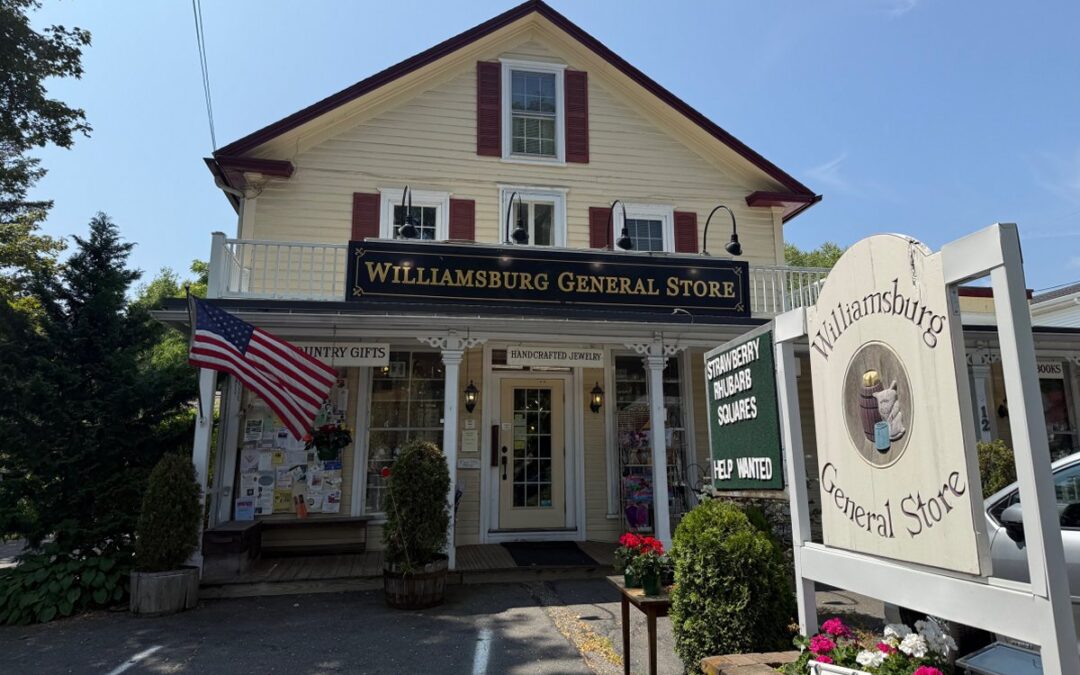
Meanwhile, I started organizing our first town music festival. The General Store in the picture is one of the planned music stages. I know nothing about music or festivals, so why not? During Covid, the main venue in our town to see local music closed in 2023. The same happened to other venues in an adjacent town. We started with no budget, no state funding, and not a lot of direction. Fast forward 6 months, and we are 3 weeks away from what we hope will be the town’s first annual Porchfest. Https://www.williamsburgporchfest.com
We got some local sponsorship, 10 musicians/groups playing on 4 porches, and we had to say no to some of the musical groups. Everyone agreed to play regardless of whether they got paid or not, and it looks like everyone should be able to be paid for their time with a little left over. Everyone seems pretty excited. I hope it goes off well.
It’s been a lot of work, but I think it will make a difference. We are already talking about a singer/songwriter music series for next year. And the framework for future Porchfests has been pretty well laid. Sometimes it’s just about getting past inertia and hoping you have momentum to move forward. Will it make a difference? Ask me after September 13th.